
Bitcoin Wallet Security: Best Practices for HODLers
In this article:
As your bitcoin holdings grow, so does the cost of your mistakes. There’s no customer support available if you lose access to your non-custodial wallet, so keeping your wallet safe is solely your responsibility. Without a reliable security setup, you risk losing access to your funds permanently.
In this guide, we explain the best Bitcoin wallet security practices. You’ll learn why they’re important and how to implement them correctly.
Key Takeaways
- If you lose both your wallet password/PIN and your seed phrase, you lose access to your holdings forever.
- Never store your funds on an exchange. Transfer them to a self-custodial offline wallet right away.
- Make multiple backups of your seed phrase and store them in separate, secure locations.
- Practice good privacy habits so no one knows you own bitcoin or where you keep it.
- Choose strong, unique passwords or PINs for your Bitcoin wallet and related accounts.
Why Bitcoin Wallet Security Matters for HODLers
When you keep your bitcoin on an exchange or another custodial service, you don’t control the private keys. The company does. If it gets hacked, freezes withdrawals, or goes bankrupt, you could lose your coins.
Self-custody reduces these risks, but it’s not a silver bullet. Storing bitcoin in a self-custodial wallet is different from keeping money in a savings account. If you forget the PIN to your bank account, the bank can verify your identity and help you get back in. With Bitcoin self-custody, there’s no one to restore your access.
In either case, large bitcoin holdings are an attractive target for criminals. Some attacks, such as SIM swaps, primarily affect custodial setups, where a phone number can provide wallet access. Others, like social engineering and physical coercion, threaten anyone with a large stash, especially if you don’t keep it secret.
For this reason, sending your coins to a self-custodial wallet isn’t enough. You should also create proper backups and adopt secure habits.

Essential Bitcoin Wallet Security Measures
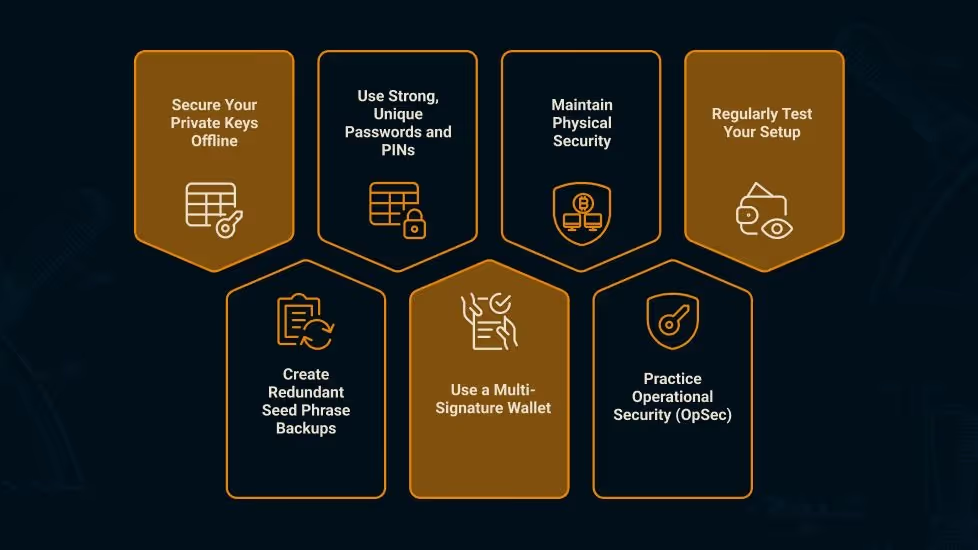
Now, let’s take a look at the best practices you need to follow to secure your coins.
Secure Your Private Keys Offline
A private key is a unique alphanumeric code that proves ownership of your Bitcoin and is used to create digital signatures for authorizing transactions. In practice, you don’t see the key, as your wallet manages it for you.
Storing your crypto online (in a hot wallet) exposes it to remote exploits. In plain terms, someone can steal your money through your internet connection. Use an air-gapped Bitcoin wallet to generate and manage your keys offline, far away from hackers.
Create Redundant Seed Phrase Backups
A seed phrase is a list of random words you receive when setting up the wallet. It’s necessary to recover access to your wallet if you forget your wallet PIN.
It’s one thing to lose your wallet and another to forget your PIN and seed phrase. In the first scenario, you can get a new wallet and enter your seed phrase. In the second, your bitcoin is gone for good.
This is why you should have multiple copies of the seed phrase. Ideally, follow the 3-2-1 backup rule. This involves keeping three total copies of your seed phrase on at least two different types of media (like paper and a fireproof metal plate), with one of those copies stored at a different location.
An even more secure backup method is Shamir's Secret Sharing, which involves splitting the seed phrase into several unique shares stored in different locations. You set a recovery threshold (for example, 2-of-3), which means you only need two out of three shares to recover your wallet. This ensures that losing one piece doesn't lock you out, and one stolen piece doesn't give a thief access to your bitcoin.
Use Strong, Unique Passwords and PINs
While private keys and seed phrases are essential for Bitcoin wallet security, you don’t need them for daily access. Instead, most wallets use a password or PIN for login. When you use an exchange to buy or sell bitcoin, you must also set a secure password.
Your password or PIN must be unique. Don’t reuse passwords across platforms, and don’t choose obvious ones like your name or birthday. As a rule of thumb, the more characters, the better.
If an exchange or wallet supports two-factor authentication (2FA), set it up. It ensures that even if a hacker steals your password, they can't access your account without a unique, real-time code from your physical device.
Use a Multi-Signature Wallet
Multi-signature wallets require more than one private key to sign a transaction. They’re standard for managing corporate Bitcoin holdings, where multiple stakeholders must approve a spend.
However, a multi-signature wallet can be equally useful for personal holdings. This setup also simplifies inheritance planning. You can distribute keys among family members or legal representatives so that no single person can move the funds alone, but the group can recover them if something happens to you.
Maintain Physical Security
Make sure that the material on which you store the seed phrase is fire and waterproof, such as a stainless steel plate. Paper is too easy to rip or burn, and ink tends to fade over time.
Store your backups in locations with restricted access. Tamper-evident seals and bank vaults are great for this, but be aware that a bank can limit when and how you can access your property.
Practice Operational Security (OpSec)
The first rule of Bitcoin OpSec is to keep a low profile. Don’t publicize your holdings online or in person. If criminals know that you have a significant amount of Bitcoin, they might use physical violence to force you to unlock your wallet and transfer the funds.
Some criminals use social engineering to trick HODLers into compromising their wallet security. For example, they might act like a fake customer support agent and ask you to share your seed phrase. Never share your password or seed phrase with anyone, and be skeptical of emails asking you to “validate” or “synchronize” your wallet.
It’s also important that you follow general cybersecurity guidelines, such as using encrypted communications tools and avoiding public Wi-Fi for transactions.
Regularly Test Your Setup
Don't wait for an emergency to find out your setup is broken. Every year, power on your hardware wallet to ensure it still works and verify your seed phrase using the wallet's built-in testing tool.
If you have a Bitcoin inheritance plan, periodically check whether your designated heirs still have their keys and understand the recovery steps.
Common Bitcoin Wallet Security Mistakes HODLers Make
The most frequent ways HODLers put their funds at risk are:
- Storing the seed phrase in the cloud: Saving your phrase in a note app, email, or cloud storage might be convenient, but it gives online thieves a chance to steal your funds.
- Leaving funds on an exchange: Exchanges are primary targets for hackers and can go bust at any time. To truly own your Bitcoin, transfer it to a self-custodial wallet immediately after purchase.
- Not testing the recovery process: Hardware can fail, and words can be recorded incorrectly. A "dry run" ensures you can actually recover your funds.
- Relying on a single backup location: It’s easy to lose your wallet and your seed phrase at the same time if you store them in one location (for example, your home safe).
Secure Your Bitcoin With The Bitcoin Way
True Bitcoin ownership starts with self-custody. However, being your own bank comes with high stakes. Setting up these protections on your own is complicated, and a single mistake in the process can lead to permanent loss of your bitcoin.
The Bitcoin Way has helped hundreds of clients set up highly secure custody setups for their bitcoin holdings. We understand the challenges HODLers face and can help you build a security system that fits your needs.
Our experts guide you through every step. Book a free 30-minute consultation.

FAQs
What is the most secure way to store Bitcoin?
The most secure way to store bitcoin is to use a cold (offline) wallet. Create at least three copies of your seed phrase and store them in separate locations. Consider a multi-signature wallet, which requires multiple parties to authorize a single transaction.
How do I protect my Bitcoin wallet private keys?
The most secure way to protect your private keys is to use a hardware wallet, which generates and stores them entirely offline. Since the wallet manages these keys for you, your primary responsibility is protecting the seed phrase (the master backup). You must keep this phrase strictly offline. Never type it into a digital device or take a photo of it.
What are the biggest Bitcoin wallet security risks?
Most bitcoin is lost through either human error or third-party failure. Attackers use social engineering tactics to manipulate people into sharing their passwords or seed phrases, while storing bitcoin with a custodian (like an exchange) means you don’t really own your funds. If the platform is hacked or goes bankrupt, you may never see your funds again.
How often should I check my Bitcoin wallet security?
There’s no fixed rule, but the frequency should match the size of your holdings. At a minimum, you should verify your security setup once a year, though every six months is better for significant wealth.