
A Digital Dictatorship Down Under
In this article:
Most people would agree that spending too much time on social media is detrimental to your general well-being. It steals hours of your life, destroys your attention span, and wrecks your productivity.
It’s called “doom scrolling” for a reason.
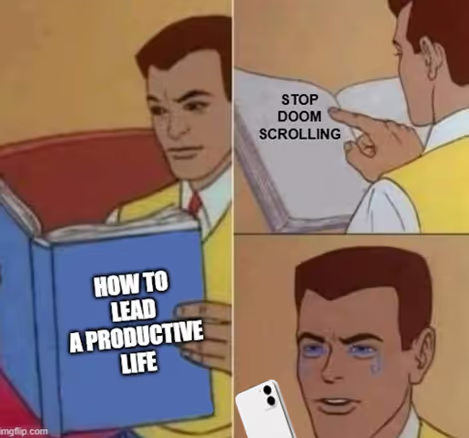
Most of us suffer from at least a mild form of “phone addiction,” but it’s particularly problematic for young people. Teenagers’ brains are not yet fully formed, and most research suggests that full maturation, particularly of the prefrontal cortex responsible for decision-making and impulse control, doesn’t take place until at least age 25.
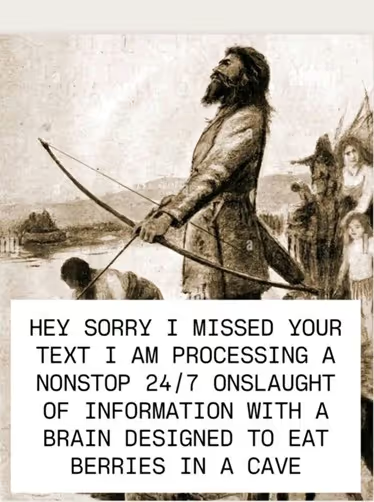
With that in mind, we should really be questioning whether exposing developing brains to a 24/7 onslaught of information is really a good idea.
Exposing young people to social media doesn’t only run the risk of destroying their dopamine receptors and turning them into unproductive zombies. It can also expose them to extreme content and potentially dangerous people who would actively seek to do them harm.
For parents, it’s a minefield. You don’t want to limit your child’s access to technology or information for fear of holding them back, but you also know that myriad dangers lurk online that can pose a very serious threat.
It presents you with some very difficult choices to make.
Unfortunately, some governments don’t think you’re capable of making those decisions yourself and are using the problem to justify some very dangerous and authoritarian behavior. Take, for example, the government of Australia, which this week introduced a sweeping new social media ban for any Aussies under the age of 16.
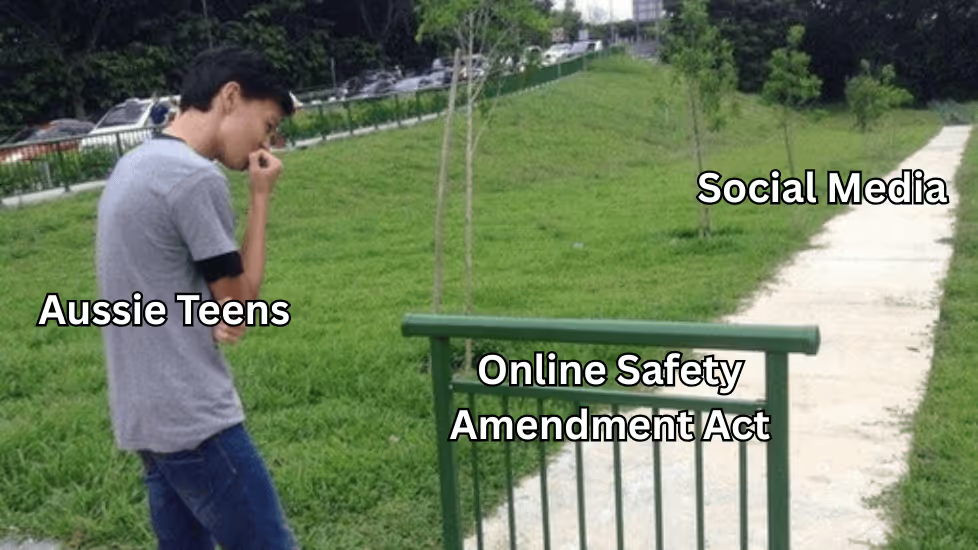
The law, called the “Online Safety Amendment (Social Media Minimum Age) Act 2024,” was passed by Australia’s parliament late last year. It requires major social media companies, including the likes of Meta, Snapchat, TikTok, and X, to take “reasonable steps” to unilaterally block children under the age of 16 from signing up to their platforms.
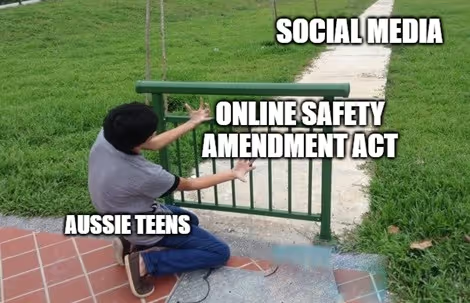
In their infinite wisdom, the Australian government’s solution to the risks posed by social media is outright prohibition. Parents get no say in the matter, and platforms that don’t implement age-verification systems by the end of the year could face hefty fines of up to $32 million.
It’s a bold experiment, but is it good news for Aussie kids? Or is this just the thin end of the wedge? Another stepping stone toward more surveillance, more censorship, and more government control?
Protection or Indoctrination?
Governments have a habit of promoting unpopular legislation under the guise of protecting children. It’s an emotive smokescreen they can use to obfuscate their true agenda. The Australian government’s Online Safety Amendment Act is no different.
Yes, limiting the time young people spend on social media may have certain benefits for their mental health and overall well-being. But what the government really wants is tighter control over the narrative.
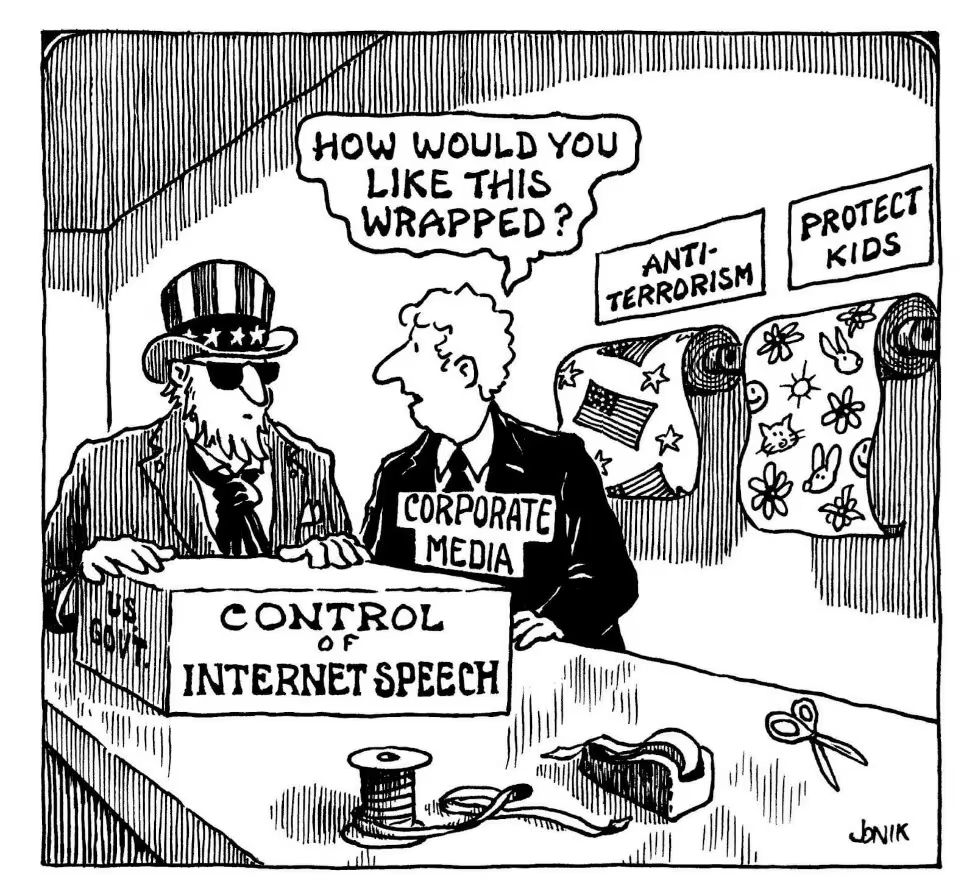
Young people today are abandoning mainstream media in their droves.
They don’t get their breaking news from state TV channels; they watch it unfold in real time on a citizen journalist’s livestream. They don’t watch tepid debates between sanctioned commentators; they engage in real, unfiltered debate online. They aren’t swayed by state propaganda, they have access to a broad range of opinions, and have developed a natural immunity to it.
Governments aren’t worried about protecting your children online. What they’re really worried about is losing control of the narrative.

Maintaining control of the narrative is a top priority for governments, because without it, their ability to coerce people’s behavior is severely limited. Dissenting voices and alternative points of view can lead people to ignore official advice and question the government’s motives, none of which is particularly convenient to an authoritarian.
The recent pandemic is a perfect example of this. In order to enforce unprecedented limits on our freedoms, multiple governments forced social media platforms to censor and even de-platform their own citizens. Even those with credible expertise were silenced.

Thankfully, the pendulum has started to swing back in the other direction.
Prominent figures in the Trump administration have been openly critical of foreign governments that curtail free speech, and since acquiring Twitter, Elon Musk has reinstated numerous banned accounts and is unapologetic about his opposition to government censorship.
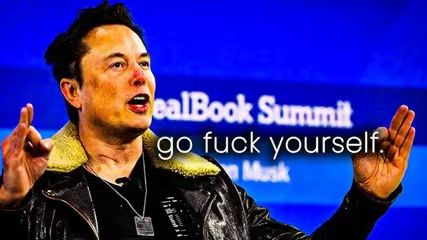
This poses a real problem for authoritarian governments like Australia’s. The platforms they want to police aren’t within their jurisdiction, and US-based owners like Elon Musk are unlikely to bow to their pressure. They’ve realized they can’t police the whole internet because they don’t have the means and they don’t have the clout.
It’s time for them to pivot.
The Australian government’s new solution is to abandon their attempts to police what the whole world can say and instead pursue the more achievable goal of limiting the information their citizens can see. Their primary goal? To prevent young people from having access to information that might call into question their official narratives.
It’s not about protection. It’s about indoctrination.

An Attack on Basic Freedoms
Limiting access to social media for anyone, including young people, is a direct assault on their fundamental freedoms.
Freedom of Speech
Australia’s social media ban is an attempt to create a digital Iron Curtain that stifles nascent political expression. By banning young people from using social media, the Australian government is removing their ability to express themselves, share ideas, report injustices, and engage in public discourse.
This is in direct contravention of Article 19 of the International Covenant on Civil and Political Rights (ICCPR), one of the most important global protections for freedom of expression, which guarantees a child’s right to express their opinion and access information.

Freedom of Association
The move also contravenes Article 22 of the ICCPR, which protects assembly and association rights. Hundreds of thousands of young people will have their social media accounts deactivated overnight, effectively wiping out their online identities.
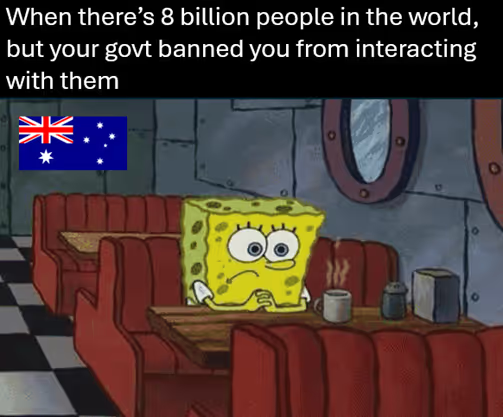
The potential for this to cause harm cannot be understated. Young people today suffer from chronic loneliness to such an extent that it’s now recognized as a global public health crisis. Cutting young people off entirely from friendship groups and vital support networks risks contributing to problems like substance abuse, depression, and even suicide, which have all been closely linked to extreme isolation.
Privacy Rights
To enforce Australia’s draconian social media ban, platforms will also have to start using invasive tools that violate the privacy of all Australian citizens. Biometric data-collection tools like facial scanning will be used to verify a user’s age, meaning that soon, no Australian will be able to access social media without first giving up their identity.
This kind of surveillance creep is dangerous and begins to normalize mass profiling. It puts users at direct risk from data breaches and marches us ever closer to a world where everything you do online is policed and monitored by the state.

Connecting the Dots: A Slippery Slope
What’s happening in Australia is unlikely to remain an isolated incident. Their social media ban has sparked widespread international interest among other governments seeking more control over their citizens.
The EU Commission’s President, Ursula von der Leyen, is explicitly supportive of the measures. US Senator Josh Hawley publicly endorsed the ban on the day it took effect, and Keir Stalin, Prime Minister of the UK, was so excited at the prospect of being able to inflict further misery on the beleaguered UK population that he needed to change his underwear.

The social media ban in Australia is just a small glimpse of what our governments have in store for us. You don’t have to be Nostradamus to realize that this is just the thin edge of the wedge. Over the coming years, governments everywhere have plans to start introducing mandatory digital IDs, social credit systems, and central bank digital currencies (CBDCs).
Implementing these systems will give governments unprecedented control over our lives. They plan to monitor everything you say, everything you do, and every economic transaction you make. And if you dare step out of line, they will simply cut you out of society.
The state isn’t trying to protect you. It’s trying to build a digital prison around you.
Protect Your Freedoms – The Bitcoin Way
Our governments’ plans would be quite worrying if they weren’t so utterly incompetent. They might have plans to control our internet activity, our money, and monitor everything we do, but their ability to achieve it is another question entirely.
We’re quietly confident that the digitally native teenagers in Australia will be able to outmaneuver their bumbling government with relative ease.

Nevertheless, it’s a good reminder of what we’re up against. The internet will only be free and accessible to you if you learn the tools that allow you to circumvent government attempts to control you.
The Australian government is giving you an early warning sign that NOW is the time to learn how to use online privacy tools, NOW is the time to learn how to secure your money with Bitcoin in full self-custody, and NOW is the time to secure a Plan B residency to ensure you have a backup plan when your government goes full 1984.
Don’t keep delaying it, because you’re only going to get so many warnings before it’s already too late. Book a free 30-minute call with one of our experts today and learn how to reclaim your freedom.